
When people think about temples in Lombok, they often picture places that reflect Balinese Hindu traditions. Pura Lingsar feels different.
What makes this place interesting to me is not only its architecture or age. Its story connects Balinese Hindu traditions, Sasak culture, sacred water, agriculture, and a long history of communities living side by side.
If you want to understand Pura Lingsar history, you need to look beyond the temple buildings. The real story lies in the relationship between the people who have considered this area sacred for generations.
Where Is Pura Lingsar?
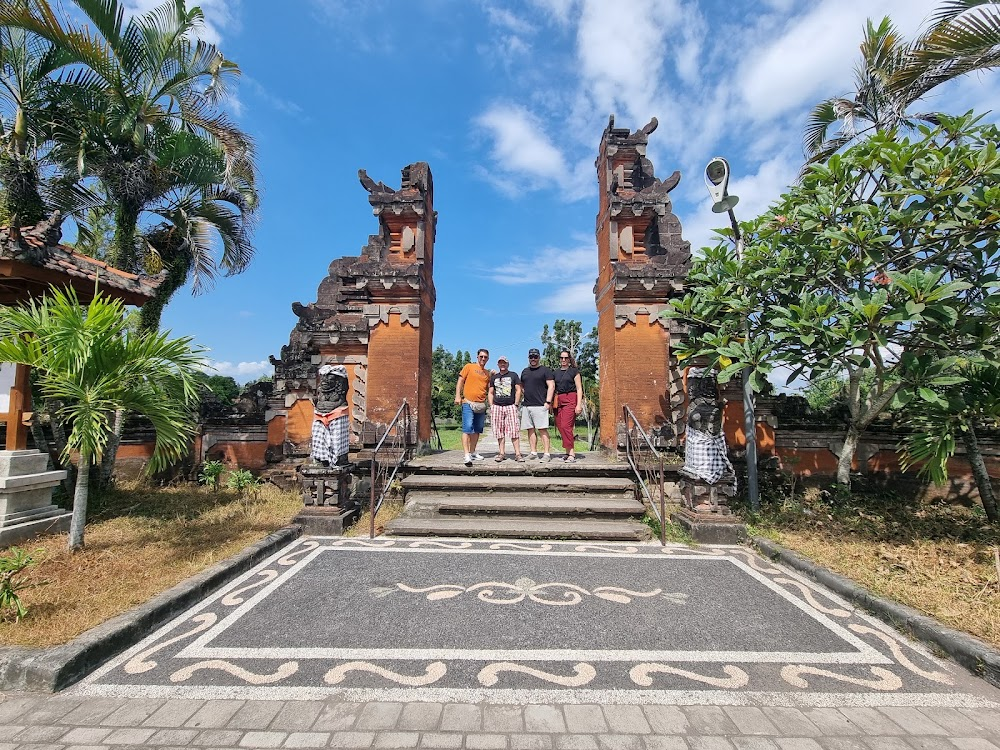
Pura Lingsar sits in Lingsar, West Lombok, within easy reach of Mataram. Unlike many tourist attractions that people visit mainly for sightseeing, this complex still functions as an important religious and cultural site.
The complex includes several distinct sacred areas. Among the most important are Pura Gaduh, which connects strongly with the Balinese Hindu community, and Kemaliq, a sacred area associated with Sasak traditions. The wider complex also includes bathing areas known as Pesiraman. (Lombok Barat Kabupaten)
That combination gives Pura Lingsar its unique character.
The Early Pura Lingsar History
The history of Pura Lingsar connects closely with the arrival and growing influence of Balinese rulers from Karangasem in western Lombok.
According to the West Lombok Regency Government’s historical account, Sasak people already regarded the spring at Lingsar as sacred before the Hindu temple complex developed beside it. Local traditions connect the Kemaliq area with Raden Mas Sumilir and older Sasak spiritual traditions.
Later, Balinese rulers developed a Hindu sacred complex next to this existing Sasak sacred area.
There is an interesting detail here because local government sources do not give exactly the same construction date. One tourism profile lists 1741, while another official historical account places the construction around 1759.
Rather than treating one date as absolutely certain, I think it makes more sense to understand Pura Lingsar as an 18th-century sacred complex that developed during the period of Karangasem influence in Lombok.
That historical context matters much more than a single year.
Pura Gaduh and Kemaliq
To understand why Pura Lingsar matters culturally, you should know the difference between its two best-known sacred areas.
Pura Gaduh
Pura Gaduh serves as an important Hindu worship area within the complex.
Its presence reflects the strong Balinese Hindu influence that became part of western Lombok’s cultural landscape. Over several centuries, Balinese communities established temples, rituals, and traditions across areas around Mataram, Cakranegara, Narmada, and Lingsar.
But Pura Lingsar did not simply replace what existed before.
The Hindu complex developed alongside a sacred place that local Sasak communities already respected.
Kemaliq
Kemaliq gives the Pura Lingsar complex another layer of meaning.
In Sasak usage, maliq relates to something sacred or spiritually significant. The sacred spring in this area played an important role in local traditions long before the wider temple complex took its present form.
This is why I would avoid describing Pura Lingsar simply as a “temple for two religions.” That description sounds convenient for tourism, but the real cultural history is more complicated.
Pura Gaduh and Kemaliq represent different religious traditions and identities. At the same time, their proximity created a space where Sasak and Balinese communities developed traditions of interaction over generations.
Academic research on Lingsar also highlights its role in maintaining social and religious interaction between Balinese Hindu and Sasak communities.
The Story and Meaning of Perang Topat
If one tradition represents Pura Lingsar better than anything else, it is probably Perang Topat.
The name literally sounds like a war involving topat, the Sasak word for ketupat or rice cakes wrapped in woven palm leaves.
And that is basically what happens.
Participants throw small ketupat at each other in a lively cultural ritual.
But Perang Topat carries much more meaning than a playful food fight.
Local traditions connect the ceremony with gratitude, rainfall, agriculture, fertility, and hopes for a successful planting season. Some participants collect the rice cakes after the ritual and take them to agricultural land because they believe they can bring blessings and fertility to the soil.
The ceremony also brings Sasak and Hindu communities together.
In recent years, local government and religious institutions have continued to describe Perang Topat as an important symbol of harmony and coexistence in West Lombok.
For me, this makes Pura Lingsar much more interesting than a historical monument frozen in the past. People still give its traditions meaning today.
Why Pura Lingsar Is Culturally Important to Lombok
Pura Lingsar tells us something important about Lombok itself.
The island has never developed from a single cultural influence. Sasak traditions form its foundation, while Balinese, Javanese, Islamic, Hindu, and other influences have shaped different parts of its history.
Lingsar shows how some of those influences met in one place.
A Meeting Point of Sasak and Balinese Culture
The arrangement of Pura Gaduh and Kemaliq gives us a physical reminder of centuries of interaction between Balinese and Sasak communities.
Instead of looking only at the architecture, I think visitors should pay attention to how both communities continue to connect with the site.
That living relationship gives the complex much of its cultural value.
A Symbol of Religious Coexistence
Pura Lingsar often appears in discussions about religious tolerance in Lombok, especially because of Perang Topat and the traditions surrounding Pura Gaduh and Kemaliq.
That does not mean everyone follows the same beliefs.
In fact, the opposite makes the place more interesting. Different communities maintain their own religious identities while participating in certain shared cultural traditions.
Researchers have described Lingsar as an important space for social cohesion between Sasak and Balinese communities in Lombok.
A Place Where Tradition Still Lives
Some historical sites slowly turn into places where visitors only take photos.
Pura Lingsar still has another function.
People pray here. Communities maintain rituals here. Perang Topat still attracts local participants. The sacred spring still carries cultural meaning.
That makes Lingsar part of Lombok’s living heritage, rather than simply a relic from the eighteenth century.
What Visitors Should Understand Before Visiting Pura Lingsar
If you visit Pura Lingsar, remember that you are entering an active sacred complex.
I recommend approaching it differently from a normal tourist attraction. Wear respectful clothing, follow local instructions, avoid entering restricted areas, and never interrupt people during prayers or ceremonies.
Taking time to learn the story behind Kemaliq, Pura Gaduh, and Perang Topat also makes the visit much more meaningful.
Without that context, you might only see old gates, courtyards, ponds, and temple buildings.
Once you understand the history, you begin to see how much of Lombok’s cultural story exists within the same complex.
Visit Pura Lingsar with Rental Car Lombok by Vibes Lombok
Pura Lingsar works well as part of a cultural day trip around West Lombok.
With a private car, you can spend more time exploring the temple complex and combine the trip with other destinations around Lingsar, Narmada, Mataram, or West Lombok without depending on a fixed tour schedule.
Rental Car Lombok by Vibes Lombok provides rental cars and private cars with drivers for travelers who want a more flexible way to explore Lombok.
You can plan your own route, stop whenever something catches your attention, and enjoy the journey at your own pace.
Explore Lombok at your own pace with Rental Car Lombok by Vibes Lombok.
Final Thoughts on Pura Lingsar History
The most fascinating part of Pura Lingsar history is not simply how old the temple is.
Its importance comes from what happened around it.
Sasak communities considered the area sacred, Balinese Hindu traditions later became part of the complex, and generations of people continued to create cultural relationships around the same sacred landscape.
Pura Gaduh, Kemaliq, the spring, and Perang Topat each tell a different part of that story.
For travelers who want to understand Lombok beyond its beaches and waterfalls, Pura Lingsar offers something different: a chance to see how history, belief, agriculture, and cultural coexistence can remain alive in one place.