
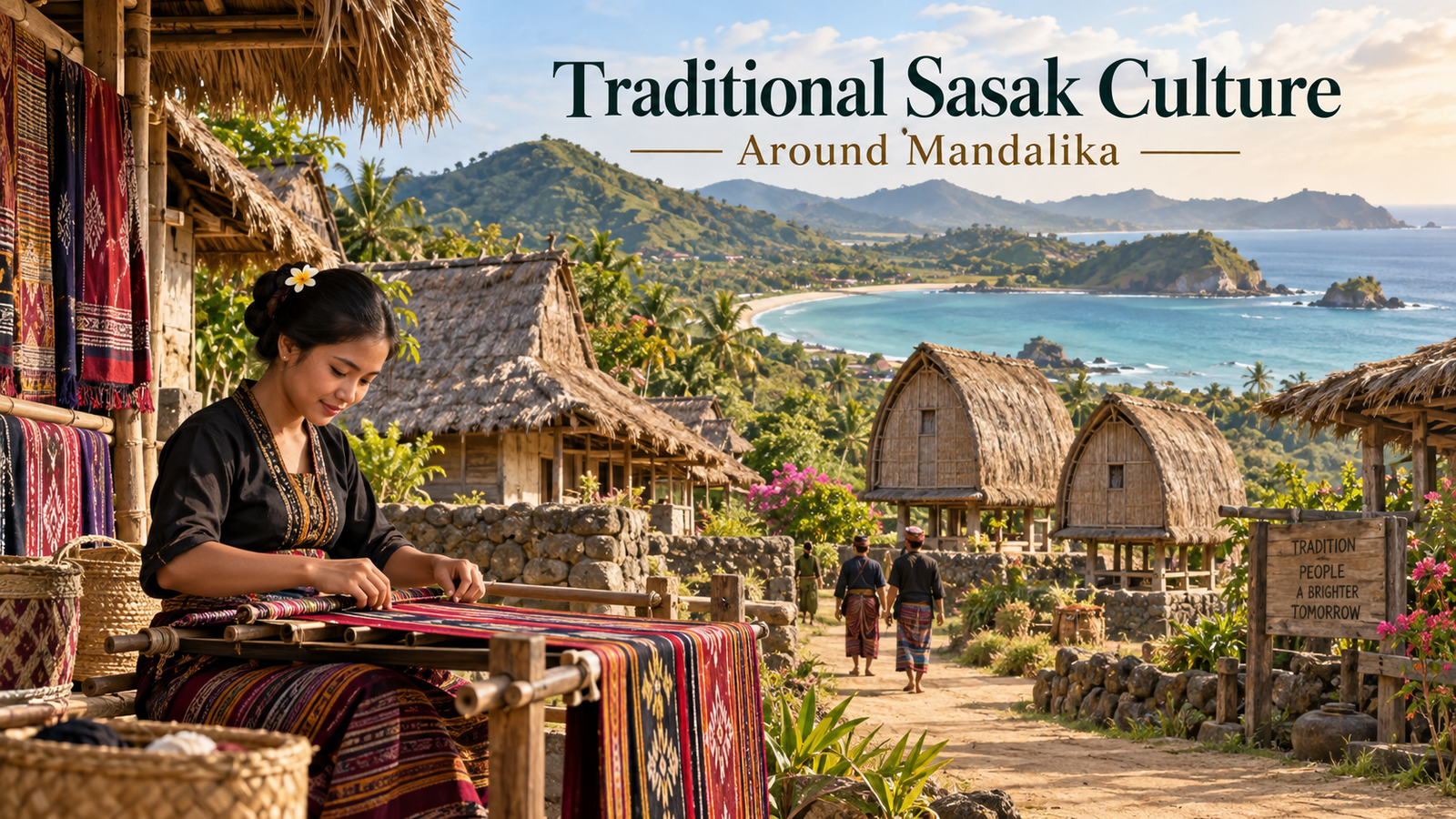
When people talk about Mandalika, beaches, green hills, and the Mandalika International Circuit usually come to mind first. But I think there is another side of this part of Lombok that deserves just as much attention: its local culture.
You do not have to travel far from the Mandalika area to discover traditional Sasak culture. Around Central Lombok, you can visit traditional villages, see distinctive Sasak houses, watch local artisans weave cloth, learn about traditional performances, and discover stories that have shaped the identity of the island.
For me, adding a cultural stop is one of the best ways to make a Mandalika trip feel more complete.
What Makes Traditional Sasak Culture Special?
The Sasak people are the native ethnic group of Lombok, and their culture remains visible across the island through architecture, textiles, food, ceremonies, music, and everyday village life.
Central Lombok makes this culture especially easy for travelers to explore because several traditional villages sit within reach of Mandalika.
What I like about visiting these places is that they are not simply museums filled with old objects. In villages such as Sade, the traditional houses are still residential homes where local families live.
That makes the experience feel very different from walking through a conventional tourist attraction.
Visit Sade Village and See Traditional Sasak Life
If this is your first cultural trip around Mandalika, Sade Village is an easy place to start.
Sade sits in Pujut, Central Lombok, along the route connecting the airport area with southern Lombok. The village has preserved many elements of Sasak culture for generations, including its traditional architecture and weaving practices.
Once inside the village, you can walk through narrow paths surrounded by traditional houses and meet local residents who can explain how their community lives.
Traditional Bale Houses and Lumbung
One of the first things you will probably notice is the architecture.
Traditional Sasak houses, commonly known as bale, use locally available materials such as bamboo, wood, clay, and thatched roofing. You may also notice the distinctive rice barns or lumbung, which have become one of the most recognizable visual symbols of Lombok.
These buildings are more than attractive photo spots. They reflect how Sasak communities adapted their homes and storage spaces to local materials, climate, agriculture, and community life. Sade and Ende remain two of the most accessible places in Central Lombok to see this architectural tradition.
Watch Sasak Weaving Traditions Up Close
Textiles are another important part of traditional Sasak culture, and this is something you can experience directly during a village visit.
In Sade, you will often see local women working with traditional looms in front of their homes. Weaving skills have traditionally passed from one generation to the next and remain closely connected with Sasak cultural identity.
Watching the process also gives you a better appreciation of how much work goes into a single piece of traditional cloth.
If you want a souvenir from Lombok, buying woven fabric directly from local artisans can be more meaningful than picking up a generic souvenir elsewhere. You can see who made it, learn about the process, and directly support the community producing it.
Discover a Quieter Cultural Experience at Ende Village
Sade may be better known among travelers, but Ende Sasak Village is also worth adding to your route.
Located in Sengkol, Pujut, Ende offers another opportunity to see traditional Sasak houses and community life close to the Mandalika area. Indonesia’s official Tourism Village Network lists traditional buildings, weaving, music, dance, and cultural activities among the experiences available in the village.
I would not necessarily choose between Sade and Ende.
If you have enough time, visiting both can give you a broader impression of Sasak village life. They are located close enough to combine comfortably within the same cultural trip.
Learn About Peresean, the Traditional Sasak Stick Fight
Not every part of Sasak culture comes from architecture or handicrafts.
One of its most striking traditions is Peresean, a traditional martial performance involving two fighters known as pepadu. They compete using rattan sticks and shields while traditional music accompanies the match.
Peresean combines physical strength, agility, movement, and strategy. Despite its competitive appearance, the tradition also carries ideas of courage, respect, and sportsmanship.
You may see Peresean during festivals or scheduled cultural performances. Ende Village, for example, lists Peresean among its cultural attractions.
However, I would not assume a performance takes place every day. If seeing Peresean is important to you, check locally before planning your visit around it.
Understand the Story Behind Bau Nyale
Perhaps no cultural tradition connects with Mandalika as closely as Bau Nyale.
The tradition comes from the famous local legend of Princess Mandalika.
According to the story, several princes wanted to marry her. Fearing that choosing one could create conflict, Princess Mandalika gathered the people at Seger Hill and eventually threw herself into the sea.
After she disappeared, colorful sea worms known locally as nyale appeared along the coast. Local tradition connects the nyale with Princess Mandalika, and communities gather each year to catch them during the Bau Nyale tradition. In Sasak, bau means to catch, while nyale refers to the sea worms collected during the event.
The story also explains why the name Mandalika carries much more meaning than simply being the name of a modern tourism destination.
If you visit Seger Beach, knowing this legend can completely change how you see the area.
Taste Sasak Culture Through Local Food
Culture is not only something you watch. Sometimes the easiest way to experience it is simply to eat.
During a trip around Lombok, you will find local dishes such as Ayam Taliwang, Plecing Kangkung, and Sate Rembiga.
I always think trying local food gives travelers another connection to a destination. After spending the morning exploring a Sasak village, stopping for Lombok food can turn a simple sightseeing trip into a much more complete local experience.
You do not need an expensive restaurant either. Local restaurants and warungs around Lombok often make the experience more relaxed.
How to Respect Local Culture When Visiting Sasak Villages
Traditional villages are tourist attractions, but they are also real communities.
That is worth remembering while you visit.
Dress reasonably modestly, follow instructions from your local guide, and ask permission before taking close-up photographs of residents. Try not to enter houses unless someone invites you inside.
If you want to buy woven fabric or handicrafts, purchasing directly from local artisans is also a good way to support the community. Bargaining may be possible in some situations, but I prefer to keep it reasonable, especially when looking at something that took considerable time to make by hand.
A little respect goes a long way and usually makes the interaction much more enjoyable for everyone.
Explore Sasak Culture Around Mandalika with Rental Car Lombok
Many cultural attractions around Mandalika are easier to explore when you have your own transportation.
Instead of planning an entire day around a single destination, you could create a route such as:
Kuta Mandalika → Sade Village → Ende Village → local lunch → other attractions around Central Lombok
This is also where Rental Car Lombok by Vibes Lombok can make the trip easier.
With a rental car, you have more freedom to decide how long you want to stay in each village, stop for food along the way, and combine cultural destinations with beaches or other attractions.
If you prefer not to drive yourself, choosing a car with a local driver can also make the journey more relaxed. A driver who knows Lombok can help you move between destinations without worrying about routes or transportation arrangements.
The goal is simple: spend more time experiencing Lombok and less time figuring out how to get from one place to another.
Experience a Different Side of Mandalika
Mandalika has beautiful beaches, dramatic hills, resorts, and one of Indonesia’s best-known racing circuits. Those may be the reasons you first put the destination on your itinerary.
But I would not leave without seeing some of its cultural side.
Walk through a traditional Sasak village. Watch someone patiently turn threads into woven cloth. Learn the story of Princess Mandalika. If your timing works, experience Peresean or the Bau Nyale tradition.
These experiences show a side of Lombok that you cannot fully understand from its beaches alone.
Even if you only have half a day, discovering traditional Sasak culture around Mandalika can become one of the most memorable parts of your trip.